Field notes / Forest settings
Beneath the Woodland Canopy
Among trees, the atmosphere is already there. Thoughtful dining adds comfort without asking the woodland to become something else.
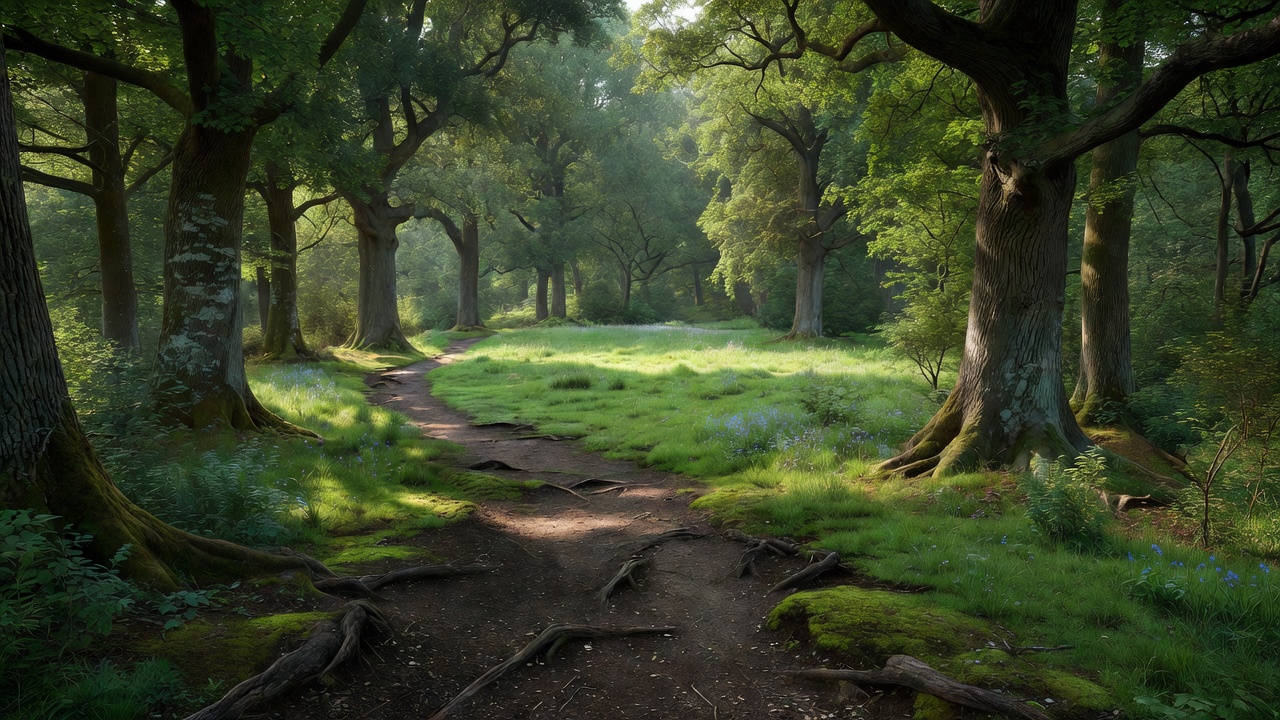
A woodland table changes how a meal sounds and feels. Conversation sits against moving leaves rather than a restaurant ceiling. Light arrives in fragments and shifts while a course is being served. The setting can feel deeply private even when it is close to a road. That impression should not distract from the realities: roots, wildlife, damp ground and restricted access all shape what responsible hospitality can offer.
Choose a clearing, not a fragile corner
An established clearing or managed event area is usually a more sensible starting point than undisturbed forest floor. Repeated foot traffic can compact soil and damage vegetation even when furniture appears temporary. A planner should establish landowner permission, any relevant permissions for commercial activity, and the conditions attached to vehicles, lighting and waste. Public access to a forest does not automatically authorise a private catered event.
Places such as the New Forest, Epping Forest, the Black Forest and Białowieża Forest show how different wooded landscapes can be. Their histories, habitats and management arrangements are not interchangeable. Mentioning them is a way to recognise that variety, not an assertion that a dining event is available or permitted. Check the responsible land manager’s current guidance for the exact location rather than borrowing assumptions from another woodland.
Make the route part of the experience
The arrival can be atmospheric without becoming a test of endurance. Ask for the distance from the drop-off point, the surface underfoot, likely muddy sections and any slopes. Consider the return journey separately: a path that feels straightforward in afternoon light can become difficult after dark. Guests should not have to use a phone torch while carrying belongings along an unfamiliar route.
Accessibility requires specific information, including the availability and location of suitable toilets. If a transfer vehicle is involved, ask about boarding, storage for mobility equipment and what happens if conditions prevent it reaching the clearing. For guests with fatigue or balance concerns, a shorter route and stable seating may be more meaningful than the setting’s apparent remoteness.
The woodland lends the atmosphere; service should arrive lightly.
Keep the kitchen plan credible
A short menu is often a strength in a forest setting. Fewer complicated finishing steps can reduce unnecessary movement, equipment and delays. That does not excuse unsafe holding temperatures or improvised hygiene. The operator needs a food safety system appropriate to the service, with potable water, handwashing, protected storage and a plan for transporting food safely between preparation and consumption.
The Food Safety Authority of Ireland and the UK Food Standards Agency publish practical food safety guidance relevant to their jurisdictions. Hazard Analysis and Critical Control Point principles provide a recognised approach to identifying food safety risks. Diners do not need to audit the kitchen, but they can ask clear questions about allergies, preparation and cross-contact. A romantic setting is not a substitute for a specific answer.
Foraging deserves particular caution. Wild mushrooms and plants should never be selected by appearance alone, and collection may be restricted. A reputable supplier or appropriately qualified specialist offers a better foundation than an informal promise to pick something nearby. Leaves and flowers used as table decoration should also be kept away from food unless their suitability is established.
Let darkness remain dark
Lighting can be useful without flooding a clearing. Low, directed light on tables and walking routes is generally more considerate than illuminating tree crowns or creating a bright installation. Wildlife sensitivity, seasonal restrictions and land manager requirements should guide the plan. Avoid attaching fittings to living trees without explicit permission and an appropriate method.
Open flames, candles, cooking fires and heaters need separate consideration. Restrictions can change with dry conditions, and permission for an event is not necessarily permission for a fire. Battery lighting may provide the desired atmosphere with less risk. If the woodland becomes unsafe because of high winds, wildfire risk or other conditions, the right response is to relocate or cancel—not to preserve the image at the expense of safety.
Close the evening carefully
Good woodland service includes the departure and the clearing of the site. All waste, including food scraps and decorations, should leave through an agreed system. Do not feed wildlife or assume that biodegradable materials belong on the forest floor. A final inspection should look for small items as well as large equipment. The table may be temporary, but its effects do not automatically disappear when guests leave.
For diners, the reward is an evening that feels close to the woodland without being careless about it. Choose an experience whose practical explanation is as persuasive as its photographs. Quiet competence allows the canopy, the changing light and the company at the table to hold your attention.