Field notes / Open landscapes
A Table Far From Roads
Distance changes the meaning of hospitality. In remote places, the most important details are often the ones you never need to notice.
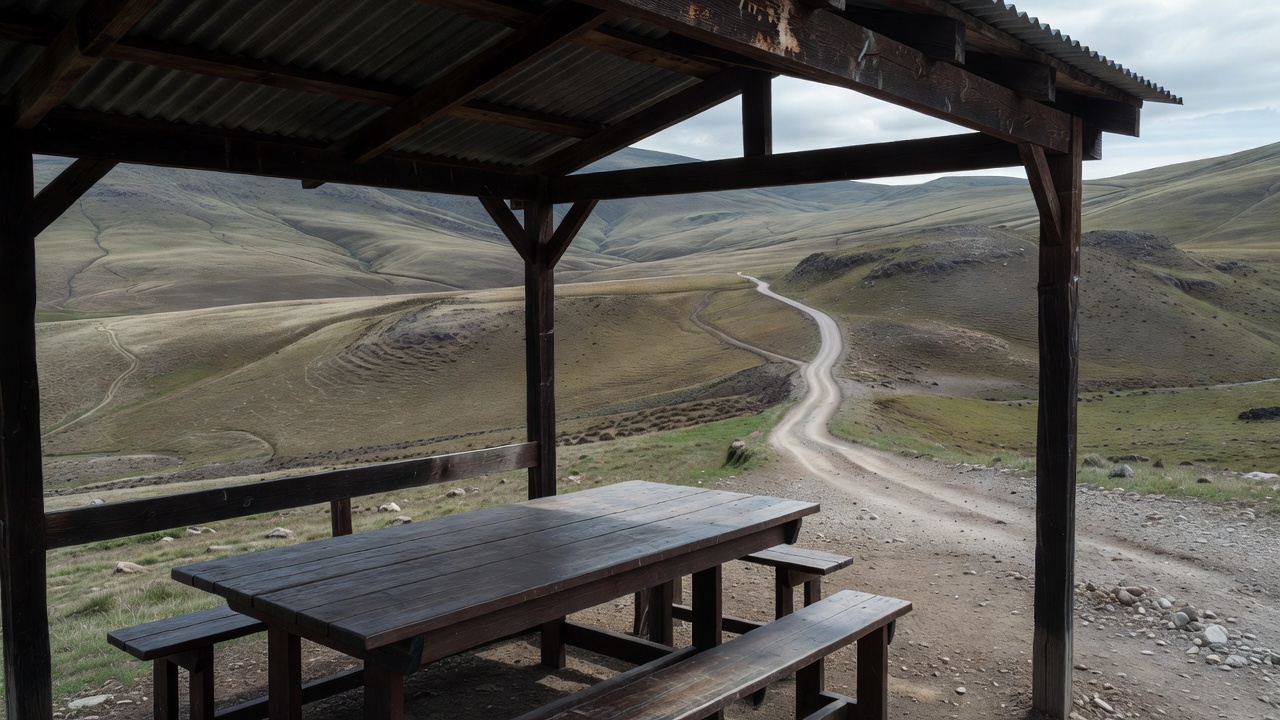
A remote meal can offer a striking sense of scale. A table seems small against a valley, an open plateau or the edge of a long stretch of land. Yet remoteness is not measured by the absence of buildings in a photograph. It is better understood through response time, access, communications and the difficulty of replacing anything that has been forgotten. An experience may look wild while remaining close to dependable infrastructure, and that can be a thoughtful choice.
Define what “remote” really means
Ask how the final part of the journey works. Is it a walk, a vehicle transfer, a boat crossing or a combination? What is the actual travel time from the nearest reliable meeting point? The return may depend on daylight, tides, road conditions or the availability of a driver. These dependencies should be explained before an itinerary is treated as settled.
Landscapes such as the Scottish Highlands, the Burren, the Dolomites, the Atlas Mountains and the Namib Desert suggest very different kinds of exposure and terrain. They are geographical references, not interchangeable models or claims about dining availability. Even within one region, a sheltered valley and an exposed ridge can require different decisions. A location-specific plan matters more than a generic promise of adventure.
Think about the journey as part of service
A welcoming arrival begins with usable information. Guests need to know what footwear is appropriate, what they must carry themselves and whether luggage or mobility equipment can be transported. Give distances and describe surfaces rather than relying on words such as “easy.” A short steep path may be less suitable for someone than a longer level route.
Weather can interrupt transport before it affects the table. A rough crossing, flooded track or strong wind may make the journey unsuitable even if the dining shelter remains comfortable. Ask which conditions lead to a change, who makes that judgement and how guests are contacted. The most responsible operator is not necessarily the one most willing to proceed.
A distant table should feel considered, not cut off.
Build the meal around what can be supported
Every service item has a journey: water, ingredients, tableware, handwashing equipment and waste containers. A focused menu can make the experience more coherent while reducing freight and unnecessary handling. Freshness depends on suitable storage and temperature control, not on a romantic description of the setting. Food safety obligations remain relevant when the kitchen is temporary or far from the table.
Potable drinking water and handwashing deserve explicit attention. Refillable bottles can reduce packaging only when there is a safe system for cleaning and refilling them. Toilets also need a practical servicing and waste plan. Avoid assuming that a remote meal is low impact because it happens outdoors or because the table is made from natural materials.
Discuss allergies and dietary requirements before transport and preparation are fixed. In an isolated setting, an unplanned substitute may be impossible. A clear limitation stated in advance is more trustworthy than an assurance that everything can be managed on the day. Guests should carry their own essential medication and discuss any relevant needs with the provider.
Choose shelter that works in the actual conditions
A canvas roof, a stone structure and a purpose-built cabin offer different protection. Ask about wind exposure, ventilation, temperature and the route between shelter and toilets. Any temporary structure should be appropriate for its use and installed by competent people. Attractive fabric does not establish suitability for severe conditions.
Heat, cold, lightning, flooding and wildfire risk require local judgement. A weather forecast is a planning tool, not a guarantee. Relevant national meteorological services, including Met Éireann and the Met Office, publish forecasts and warnings for their areas. A host should use appropriate local information and have a clear point at which a different plan takes priority.
Keep environmental claims specific
Remote landscapes can be sensitive to vehicle movement, repeated footfall and poorly managed waste. Ask whether an existing durable site can be used instead of creating a new one. Established Leave No Trace principles offer a useful starting point, alongside the actual rules of the land manager. Permission, local conservation requirements and seasonal restrictions take precedence over an attractive concept.
There are trade-offs. Reusable tableware may need more transport; a closer location may produce a smaller overall journey; a fixed shelter may avoid repeated installation. Simple claims such as “zero impact” rarely explain these choices well. Look for practical detail about routes, energy, waste removal and group size rather than relying on a green label.
The memorable part of a remote meal should be the feeling of being present in a larger landscape. Good planning makes that possible without pretending the place has no limits. Choose the setting whose practical arrangements give you confidence, and allow the view to be the extraordinary part.