Field notes / Cultivated landscapes
Dining Within the Garden
The garden offers a rare balance: the openness of being outside, with the reassuring structure of a place carefully tended.
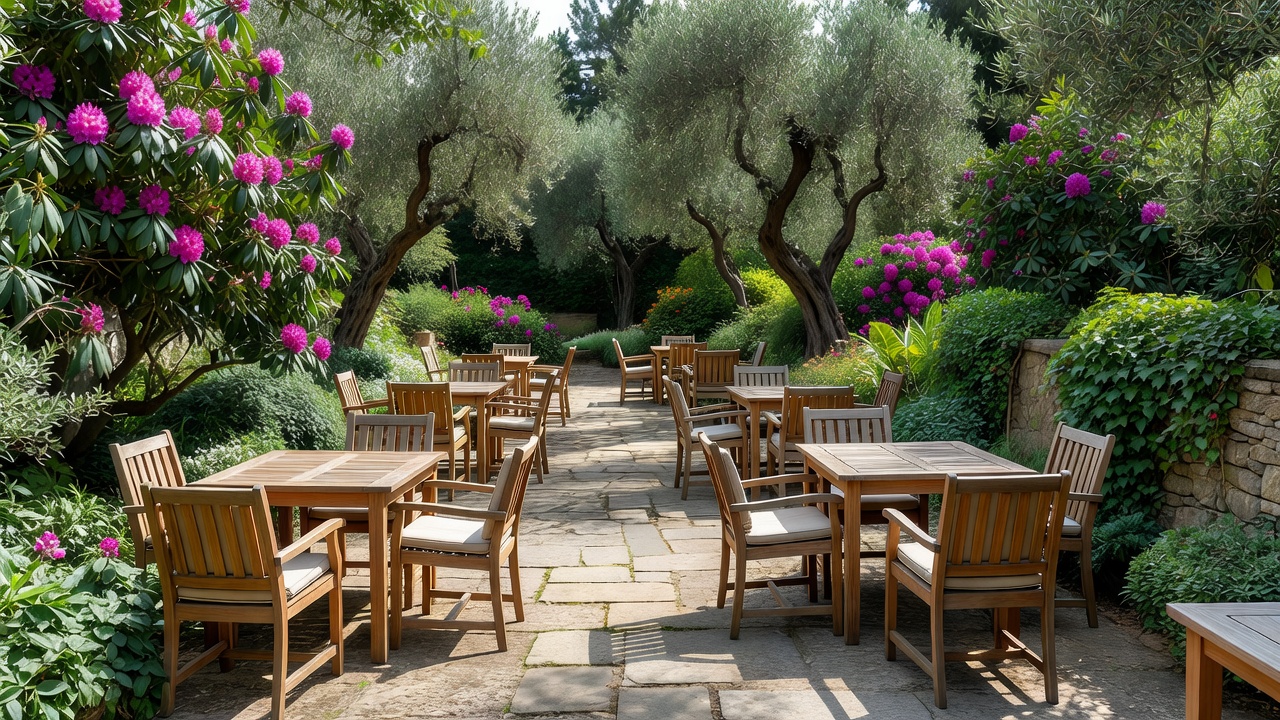
A garden meal begins before anyone sits down. The approach might pass a herb border, an orchard or a wall still holding the afternoon’s warmth. These details establish the mood, but they also reveal practical qualities. A wide, firm path makes arrival easier. A sheltered corner softens the wind. A nearby building can provide a genuine alternative when the weather turns. The best garden setting is not simply attractive; it supports the entire rhythm of the visit.
Read the garden as a sequence
Consider how guests move from arrival to a welcome drink, from the table to the toilets, and back to transport. A formal terrace may be close to the kitchen but exposed to reflected heat. A table beneath an old tree may feel cool at midday, yet sit on uneven ground. An orchard can offer a beautiful sense of enclosure while making the last part of the route difficult after rain. Ask for descriptions of these transitions rather than relying on one wide photograph.
Historic gardens offer useful ways to think about space without implying that dining is available there. The outdoor rooms at Sissinghurst Castle Garden demonstrate how planting and boundaries can create intimacy. The productive landscapes at the Lost Gardens of Heligan invite attention to growing and cultivation. The Royal Botanic Gardens, Kew encourages a broader understanding of plants and their environments. These are references for observing gardens, not recommendations for private dining or claims about current services.
Let the kitchen garden tell a truthful story
A menu described as garden-led should explain its relationship with the growing space. Some ingredients may come from the property, while others come from specialist suppliers or neighbouring farms. Neither arrangement is inherently better. What matters is that the language is precise. Ask which ingredients are genuinely grown on site, whether the menu changes with the harvest, and how the kitchen handles a crop that is late, damaged or simply unavailable.
A spring plate might emphasise leaves and fresh herbs; late summer may bring tomatoes, beans and stone fruit. Regional climate, growing methods and individual seasons change that pattern. Avoid treating a calendar as a guarantee. A thoughtful kitchen can substitute well without making the meal feel like a compromise, particularly when dietary requirements have been discussed before the day.
A garden should shape the meal, not merely decorate its edges.
Comfort belongs in the design
Beautiful chairs are not always comfortable chairs. For a long meal, ask about backs, armrests and stable placement. Tables need sufficient space for knees and mobility equipment, not just generous place settings. Gravel, lawn and stepping stones each create different access conditions. A route that works in dry weather may become unsuitable after rainfall, so request an alternative where needed.
Sound also matters. A fountain can lend a pleasant background texture but make conversation harder for some guests. Music may be unnecessary when the garden already offers birdsong and moving leaves. Consider lighting from the diner’s position: a glowing border does little to illuminate a change in level. Routes, steps and toilets need useful, restrained light rather than decorative brightness alone.
Make the weather alternative part of the invitation
A parasol is shade, not a complete rain plan. A marquee or pavilion requires appropriate installation, safe access and a decision process for wind or heavy rain. Ask who decides whether the setting changes, when that decision is made and what the alternative actually looks like. If the garden itself is the main reason for visiting, understand the cancellation or rescheduling terms before committing.
For guests, practical preparation can remain discreet: a layer for evening, footwear suited to the stated surface and any essential medication carried personally. For planners, comfort comes from advance communication rather than asking guests to improvise. Clear information feels more hospitable than a long list of surprises on arrival.
Leave the planting intact
Garden dining should respect the work that makes the space possible. Keep service routes away from vulnerable beds, avoid attaching decorations to plants without permission, and never pick edible-looking leaves without expert identification and approval. Discuss waste collection, washing arrangements and what happens to floral decorations afterwards. A smaller, well-placed table can create a more memorable experience than a larger installation that overwhelms the garden.
The most persuasive luxury here is proportion: enough service to make the evening easy, enough restraint to let the garden remain itself. Start with the path and the shelter, ask honest questions about the menu, then leave time simply to notice where you are.